








Introduction to Technology in Escape Room New York
Escape rooms have evolved from simple lock-and-key setups into sophisticated, immersive adventures using state-of-the-art technology. In a city like New York—known for its creativity, innovation, and entertainment—escape rooms have adopted advanced tools that elevate storytelling, puzzle design, and player engagement. Among the leaders in this evolution is Escape Room NYC – Mission Escape Games, a premier destination for immersive and technologically enhanced gameplay.
Many players discover these experiences through the popular escape room new york quests offered by Mission Escape Games, where technology enhances every aspect of the adventure, from the moment the game begins until the final escape.
This in-depth article explores how modern technology powers today’s escape rooms—and why New York’s escape game scene stands out as one of the most innovative in the country.
How Technology Enhances Storytelling in Escape Room New York
Storytelling has become a defining feature of next-generation escape rooms. Instead of relying on written clues or basic props, advanced escape rooms incorporate technology to bring narratives to life. Story elements are delivered using:
-
High-definition intro videos
-
In-room monitors or projection screens displaying narrative updates
-
Dynamic lighting changes tied to story progression
-
Voiceover messages and audio cues
-
Cinematic soundtracks to set mood and tension
This transforms the experience into something more like a live-action movie or interactive theater performance. Technology ensures that players remain emotionally connected to the narrative from beginning to end.
The Role of Sensors and Motion-Activated Technology
One of the biggest upgrades in escape room innovation is the use of advanced sensors. These invisible triggers respond to players’ actions in real-time, allowing puzzles to evolve smoothly and logically.
Types of Sensors Commonly Used
-
Motion Sensors: Detect player movements or hand gestures to trigger clues or mechanisms.
-
Pressure Sensors: Hidden beneath objects or floors to trigger sequences based on weight or placement.
-
Magnetic Sensors: Recognize when items with magnetic components are aligned correctly.
-
Light or Laser Sensors: Allow for beam puzzles, laser mazes, or precise alignment challenges.
Sensors replace clunky mechanical triggers and allow for more complex, interactive, and reliable puzzle sequences.
RFID and NFC Technology in Escape Room New York
RFID (Radio-Frequency Identification) and NFC (Near Field Communication) allow objects to “communicate” with the room digitally. This enables:
-
Props that trigger mechanisms when placed in the correct spot
-
Digital keycards or badges for high-security themed rooms
-
Multi-step puzzles activated by proximity
-
Invisible wireless triggers for seamless puzzle progression
RFID technology improves immersion, making puzzles feel magical or futuristic based on the room’s theme.
Digital Locks and Electronic Interfaces
As technology evolves, padlocks are being replaced with:
-
Touchscreen keypads
-
Biometric simulators (fingerprint/handprint readers)
-
Digital vault systems
-
Color and pattern-input devices
-
Electronic safe mechanisms
Digital locks offer more puzzle variety, allow multi-step logic sequences, and blend perfectly with modern themes—like heists, spy operations, and scientific labs.
Lighting and Audio Technology for Immersive Environments
Lighting and sound technology create emotional immersion and guide pacing throughout an escape room. Advanced systems include:
-
Programmable LED lighting that changes based on puzzle progress
-
Spotlights highlighting key areas or clues
-
Directional speakers that simulate footsteps, whispers, or environmental noises
-
Thematic sound effects such as machinery, storms, or countdown alarms
-
Cinematic background music that builds tension or excitement
Together, these elements create atmospheric environments that enhance the sense of urgency and realism.
Projection Mapping and Visual Effects
Projection mapping is one of the most dynamic technological tools used in escape rooms. It allows designers to:
-
Transform walls into animated landscapes
-
Display hidden clues or messages
-
Simulate explosions, portals, or digital interfaces
-
Create illusions of motion, depth, or dimensional changes
Rooms appear to “shift” as players advance, making the experience feel alive and story-driven.
Tablet and Touchscreen Integration
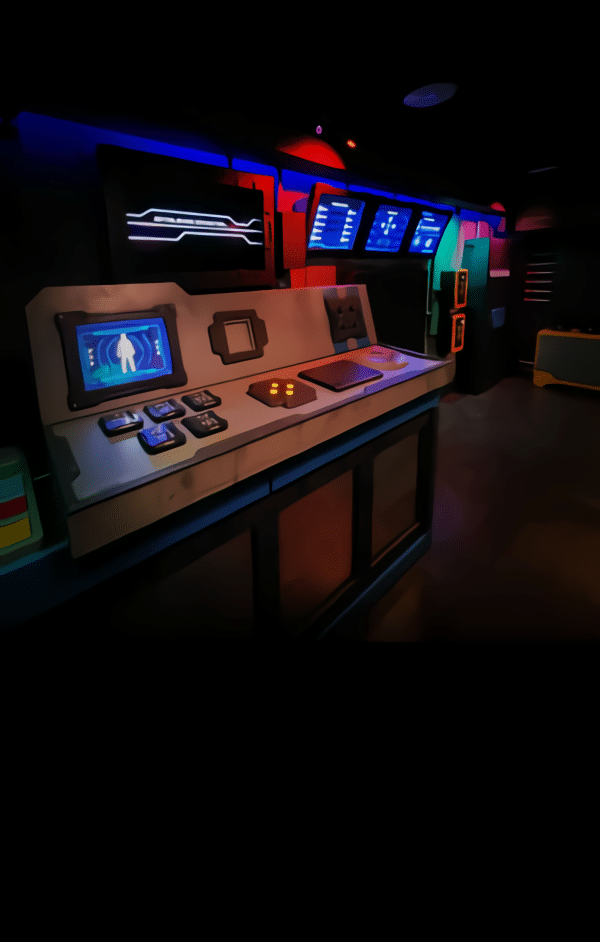
Some escape rooms integrate digital tablets or wall-mounted screens to:
-
Display mission briefings
-
Provide blueprints or maps
-
Scan virtual objects
-
Track progress
-
Deliver real-time information from in-game characters
When used correctly, tablets enhance immersion without overwhelming players.
Laser and Light-Based Puzzle Mechanics
Laser technology powers some of the most exciting, high-energy puzzles in modern escape rooms. These may include:
-
Laser mazes requiring players to avoid beams
-
Mirror puzzles redirecting light to sensors
-
Color-beam combination challenges
-
Light-guided pattern recognition puzzles
These challenges demand precision, teamwork, and problem-solving under pressure.
Time-Based and Reactive Puzzle Systems
Technology allows for dynamic, time-sensitive puzzles that escalate tension. These might include:
-
Real-time countdown clocks
-
Audio and lighting changes during timed events
-
Multi-step stages that shift as puzzles evolve
-
Environmental effects triggered by player actions
This modern puzzle design replaces static clues with fluid, cinematic interaction sequences.
AI-Assisted Gameplay and Interactive Characters
AI-powered components are becoming more common in elite escape rooms. They may include:
-
Smart hint systems that adjust to player behavior
-
Voice-activated characters built into the storyline
-
AI-driven puzzle responses
-
Adaptive dialogue based on player choices
AI improves immersion while reducing the need for live game master interaction.
Environmental Effects: Fog, Wind, Heat, and Vibration
Environmental technology adds realism and emotional intensity. Escape rooms may use:
-
Fog machines for mystery or atmosphere
-
Wind effects simulating storms or air blasts
-
Temperature controls matching environments (warm labs, cold vaults, etc.)
-
Vibration modules to simulate earthquakes, machinery, or footsteps
-
Scent diffusers to enhance thematic immersion
These multi-sensory elements make rooms feel alive.
Automation and Multi-Room Transitions
Automation enables large, complex rooms to unfold seamlessly. Advanced software controls:
-
Door locks
-
Lighting transitions
-
Puzzle activation
-
Hidden panel movements
-
Sound and video cues
This allows players to move from room to room without interruption—enhancing story flow and maintaining immersion.
Interactive Props and Microcontroller-Based Systems
Many escape room props incorporate microcontrollers such as Arduino or Raspberry Pi. These allow props to:
-
Light up or play sound on command
-
React to touch, heat, vibration, or motion
-
Communicate with other devices
-
Trigger mechanisms based on player action
Interactive props give escape rooms unlimited creative potential.
Conclusion: Technology Creates the Modern Escape Room New York Experience
Technology is the backbone of today’s escape rooms. From motion sensors and projection mapping to AI-driven characters, environmental effects, digital interfaces, and microcontroller-based props, escape rooms have transitioned from simple logic puzzles to immersive cinematic worlds.
Escape Room NYC – Mission Escape Games continues to lead this evolution, designing adventures that blend storytelling, teamwork, and advanced technology into unforgettable experiences. Technology doesn’t just enhance escape rooms—it transforms them into interactive, emotionally engaging, and highly replayable entertainment.
For enthusiasts, families, corporate teams, and first-time players, the escape room new york experience is a thrilling journey powered by innovation, creativity, and cutting-edge tech.
FAQs
1. What types of technology are used in escape room New York experiences?
Sensors, RFID systems, digital locks, projection mapping, lighting automation, sound design, environmental effects, microcontrollers, and AI systems are commonly used.
2. Are tech-heavy escape rooms harder or easier than traditional rooms?
They can be easier to understand because interactions feel natural, but multi-step puzzles may be more challenging due to sequencing and timing.
3. Do escape rooms still use traditional padlocks?
Some do, but advanced escape rooms—especially in New York—primarily use digital interfaces and tech-based mechanisms for smoother gameplay.
4. Is technology safe to use in escape rooms?
Yes. Escape room technology is designed for safety and undergoes regular maintenance and testing.
5. Why do modern escape rooms rely so much on technology?
Technology offers greater creativity, story depth, puzzle variety, and immersive realism, elevating escape rooms beyond traditional physical puzzles.
Read: What Are the Most Instagrammable Escape Room New York Experiences?
Read: What Happens If You Get Stuck in an Escape Room New York?